

2026 AI Regulatory Landscape in Illinois: What Employers Need to Know
02.25.26
As of January 1, 2026, Illinois has entered a new era of artificial intelligence (AI) governance — most notably in the employment context — requiring companies operating in the state to treat AI compliance not as a best practice, but as a statutory obligation.
While the U.S. still lacks comprehensive federal AI regulation, Illinois has taken a significant step toward mitigating bias and promoting transparency in AI-assisted decision-making, especially in hiring and workforce management.
1. Now in Effect: Amendments to the Illinois Human Rights Act (HB 3773)
The centerpiece of Illinois’s AI regulatory push is the amendment to the Illinois Human Rights Act (IHRA), which took effect January 1, 2026. Under this law:
- Employers must disclose to employees when AI systems are used to make or assist with employment-related decisions, including recruitment, hiring, promotions, discipline, termination and other terms or conditions of employment.
- The statute broadly defines “AI” to include systems that use data inputs to generate predictions, recommendations or decisions that could influence workplace outcomes.
- Using AI tools that result in discrimination against protected classes, such as race, gender, age, national origin, disability or even indirect proxies like zip codes, is prohibited.
- Unlike some other state frameworks, any use of AI that influences employment decisions may trigger notification obligations, not just where AI is the sole or decisive factor.
Failure to provide the required notice or to prevent discriminatory effects may be treated as a civil rights violation enforceable by the Illinois Department of Human Rights and the state’s Human Rights Commission.
2. In Force: The Digital Voice and Likeness Protection Act (HB 4762)
Illinois previously passed the Digital Voice and Likeness Protection Act (HB 4762), which became effective on August 9, 2024. Although not new in 2026, the statute continues to carry significant compliance implications as businesses review existing agreements and draft new contracts involving AI-generated digital replicas. The law renders certain contract provisions unenforceable if they permit the creation or use of an individual’s digital voice or likeness unless:
- The agreement includes a reasonably specific description of all intended uses of the digital replica; and
- The individual had legal counsel or union representation at the time of signing.
For employers, producers, and content creators, this means that broad or boilerplate clauses granting rights to “use AI to generate likenesses” may not be enforceable unless the contract satisfies the Act’s disclosure and consent requirements.
3. In Force: AI Regulation in Therapy and Health Care Services (HB 1806)
Illinois has also addressed AI use in the healthcare sector through the Wellness and Oversight for Psychological Resources Act (HB 1806). Enacted in 2024, this statute specifically regulates the role of AI in mental health and therapy services and remains fully enforceable in 2026. Rather than focusing on digital identity rights, the Act aims to ensure that AI does not replace licensed clinical judgment and that patient protections remain central in therapeutic settings.
4. Upcoming Legislative Priorities for 2026
- AI Safety and Responsibility Act: Modeled after failed California legislation but tailored for the Midwest, this bill would require developers of “high-impact AI” systems (used in health care, housing, and insurance) to conduct annual impact assessments and implement risk-mitigation measures. It focuses on “algorithmic accountability” and would likely grant the Illinois Attorney General’s office the power to fine developers for biased outcomes.
- AI Labeling and Deepfake Disclosure: Pending legislation seeks to mandate that any AI-generated content (audio, video or image) used in a commercial or political capacity must carry a clear and conspicuous watermark or disclosure. This aims to combat misinformation in what is expected to be a high-stakes election year.
Key Takeaways for Legal Counsel
- Audit Vendors: The EEOC and Illinois courts have signaled that “I bought it from a vendor” is not a valid defense for discriminatory outcomes.
- Update Handbooks: Ensure AI disclosure language is integrated into your 2026 employee handbooks and onboarding documents.
- Review Contracts: Confirm that digital likeness provisions comply with HB 4762’s specificity and representation requirements.
- Review Insurance Coverage: Consult with brokers to ensure “AI-related liability” and “algorithmic bias” are covered under existing D&O or Cyber policies.
Aronberg Goldgehn’s employment law and artificial intelligence, privacy and technology practitioners help employers and business owners navigate the evolving legal landscape at the intersection of workforce management and emerging technologies. The team advises on compliance, risk mitigation and policy development related to AI-driven workplace tools, data privacy and technology-enabled employment decisions.
Learn more about how the firm supports clients across the full spectrum of employment and technology-related workplace matters.
- Aronberg Goldgehn’s employment law practice group
- Aronberg Goldgehn’s artificial intelligence, privacy and technology practice group
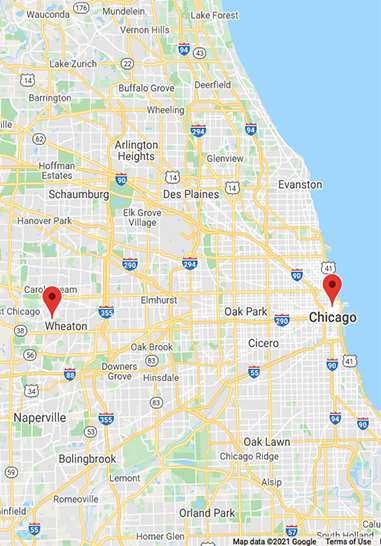
225 W. Washington St.Suite 2800Chicago, IL 60606
301 South County Farm RoadSuite AWheaton, IL 60187

